If you earned your PharmD, you could have between $50,000 and $350,000 in student debt depending on the type of institution you went to and the financial support you received in school from working part-time or with family.
On the lower end of the debt spectrum, refinancing while working for a private employer to pay off pharmacy school loans can make a lot of sense, especially if you want a lower interest rate. But student loan refinancing options aren’t right for everyone. When you owe more than you earn, you may want to evaluate both types of pharmacy student loan forgiveness programs.
If you look at the American Association of Colleges of Pharmacy (AACP) 2026 Graduate Student Surveythe average pharmacy student debt is $188,157 for all graduates with loans. In fact, 81.5% of new pharmacy doctorate graduates in 2026 graduated with debt. However, I believe this estimate underestimates the problem many pharmacists face. The average pharmacy school debt we have seen from our pharmacist clients is $234,685. Healthcare professionals tend to have high loan balances.
With such daunting debt, you want to evaluate all of your options, including student loan forgiveness options for pharmacy residents in the nonprofit and private sectors. You want to make your student loan repayment more manageable and look into public loan repayment programs that can help.
Pharmacists’ salaries are under siege
Chains like CVS and Walgreens make it difficult to get full-time hours in some parts of the country. Hospitals realized they could create residency programs and hire three young pharmacists for the price of one. Clearly, pharmacist salaries present barriers to growth above inflation.
In some areas of the country, pharmacists will continue to earn fantastic incomes and have no problem maintaining financial security. Particularly in underserved rural areas, such as Health Professional Shortage Areas (HPSAs), there is a shortage of pharmacists and room for negotiation over wages and working conditions as well as loan repayment assistance options.
I wouldn’t go so far as to say that pharmacist salaries are falling overall, but in the toughest parts of the country for pharmacists, they could be. In other areas, pharmacist salary growth has slowed.
Slower overall pharmacist salary growth and high barriers to future salary growth make pharmacist student loan forgiveness a viable strategy for many recent graduates.
Obtain public service loan forgiveness as a pharmacist
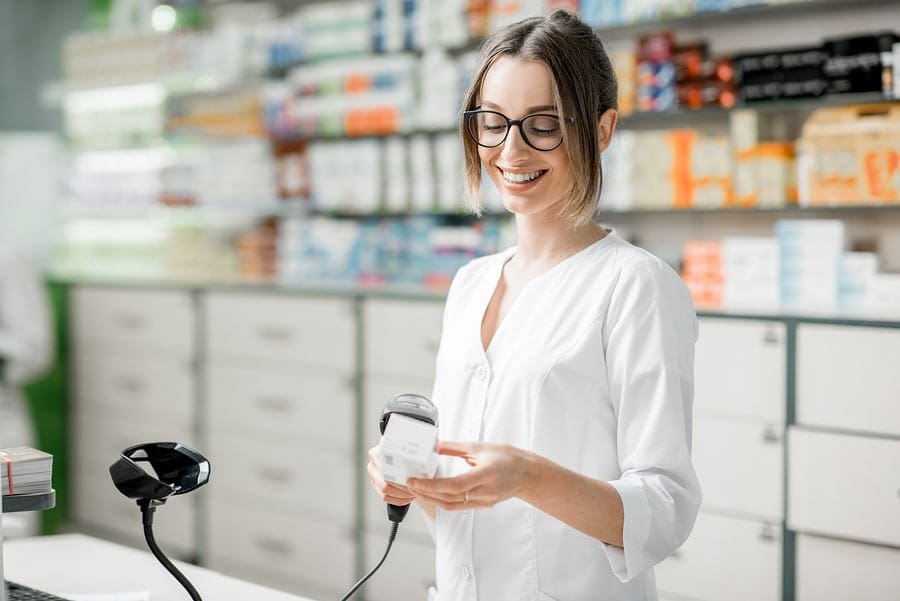
You could benefit from the Public Service Loan Forgiveness (PSLF) program if you work in a hospital pharmacy or community pharmacy. To qualify, you must have federal student loans and be on an income-driven repayment (IDR) plan.
You must work for ten years with an eligible nonprofit employer while making payments based on your income. If you had $150,000 in student debt through the Direct Loan program, you can enroll in the Income-Driven Repayment (IBR) plan. If your first loan was disbursed on or after July 1, 2014, you would qualify for what we call the “new IBR,” in which case your monthly payments will be based on 10% of your discretionary income.
Imagine you complete a two-year residency program and earn $110,000 once you are employed by the hospital. Here is the cost of PSLF compared to refinancing at a 5% fixed rate over 10 years.
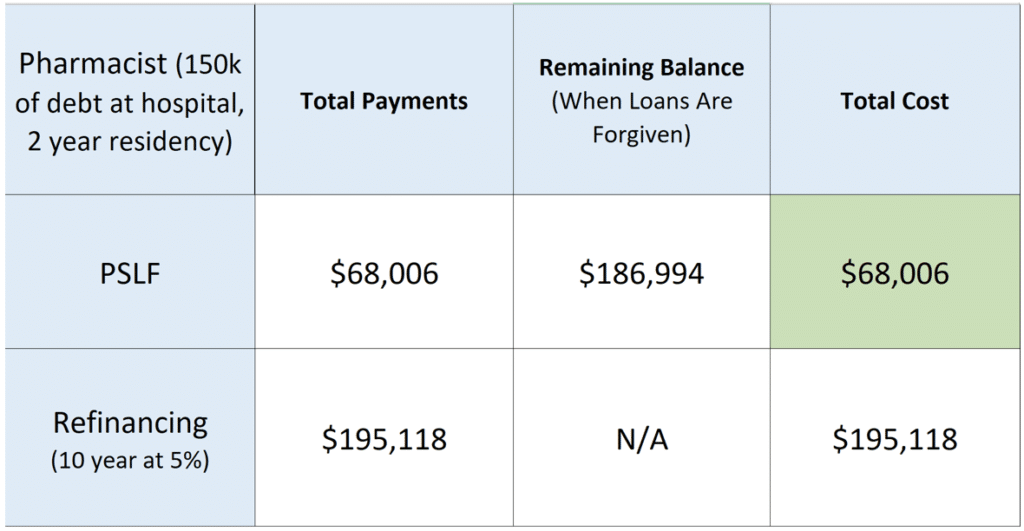
This is an attractive benefit worth over $127,000 over ten years of service! All nonprofit pharmacists must pay their loan balance to receive PSLF. That said, you probably shouldn’t choose a job just because it qualifies. But make sure you take advantage of this benefit if you want this kind of career.
If you meet the eligibility requirements, you can improve your personal financial situation and pay less. Borrowers who have taken out private student loans are unfortunately not eligible: only federal loans from the U.S. Department of Education are eligible.
Request pharmacist student loan forgiveness in the private sector
Applying for loan forgiveness in the private sector is a little-understood path to pharmacist loan forgiveness. Under this strategy, you must make 20 to 30 years of payments on an income-driven repayment plan. Depending on your situation, you may have access to IBR, PAYE, ICR or RAP.
The new IBR requires you to pay 10% of your discretionary income in monthly payments for 20 years. At the end of this period, you must pay taxes on the forgiven balance as if it were income.
If you owe more than 1.5 times your income for most of your career, this strategy could make a lot of sense. Keep in mind that you need to include your spouse’s debt and income in this equation if you are married, because the government will include this information (unless you file your taxes separately).
Let’s look at an example. Let’s say Kim went to Touro College of Pharmacy (one of the most expensive schools in the country) and owes $250,000 with an average interest rate of 6%. She gets a full-time job at CVS, paying $120,000 a year. She could refinance at 5% for 10 years, but she doesn’t like the idea of monthly payments of $2,652 for the next 10 years.
With the new IBR, she could pay about $800 a month long term and save about $300 a month in an investment account to cover her tax bomb. The difference could be put into his 401k account for retirement.
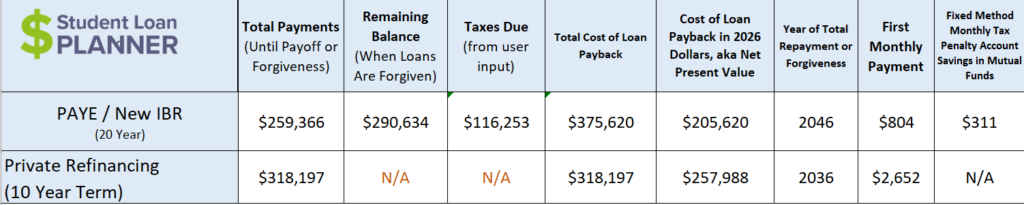
The IBR plan, in this case, costs more than refinancing with private lenders in absolute dollars. However, if you use a 5% discount rate, the cost of IBR becomes much cheaper in 2026 dollars.
That means Kim, a Touro PharmD graduate, could refinance, or she could have a fully funded retirement account with modest payments. She also allegedly has a six-figure tax bomb account at a taxable brokerage.
One day she may or may not need that money to cover her tax bomb payment to the IRS. If the government passes a law making student loan forgiveness tax-free, that money would be theirs.
The higher the debt-to-income ratio, the more attractive pharmacy student loan forgiveness is in the private sector. You don’t want to turn 40 with nothing to show for your years of hard work other than zero debt.
A loophole for part-time pharmacists
Maybe you’ve considered switching to a part-time job for a few years while you raise a family. Maybe you’ve even thought about withdrawing from the workforce for a few years. While this should always be your choice, it’s a choice many men and women make to be able to spend more time with family.
If you earn less money, your student loan payments decrease and the value of private sector forgiveness increases. To see how this works, let’s assume that Kim, from the previous example, cuts her work hours in half during the first five years of her career for personal reasons.
Watch how the value of federal loan forgiveness increases in today’s dollars.

Even though she only has about five years of lower income, Kim would save about $38,000 in 2026 on her loan repayment through forgiveness. With private sector loan forgiveness, your part-time or full-time status doesn’t matter. This is a huge gap.
This would allow Kim to reduce her payments from $800 per month to around $300 per month while she works part-time. She would build credit for up to the 20 years it takes to forgive the loan, giving her more flexibility in her life.
Clearly, loan forgiveness for pharmacists is not limited to financial matters. It can also allow you to live a lifestyle for your family that you never dreamed was possible.
Develop a plan for your pharmacy school loans or hire an expert
Review all of your options for your pharmacy school loans and develop a plan that fits your goals and career. I want to point out that the examples above become more complex if you add debt or spousal income, which you should if you do a proper analysis.
If you owe a lot of pharmacy student loans relative to your income, pharmacy school loan forgiveness through the PSLF program or the 20-30 year taxable option could make a lot of sense. Make sure you’re making qualifying payments and following the correct repayment schedule. If you need short-term help, evaluate deferment and forbearance options.
Private borrowers with good credit scores can look for student loan refinancing to get a better interest rate. View loan terms, repayment terms and rates. Although this is not a loan forgiveness program for pharmacists, it can help.
Patients trust you for expert advice and guidance on their medical options. If you’d rather not try to learn this yourself, you can hire us to develop a personalized plan tailored to your specific situation.
Do you have experience with student loan forgiveness for pharmacists? Share in the comments!